Action dossier
Cave Story+
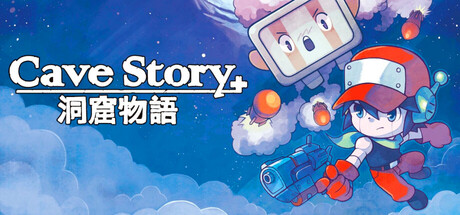
- Vibe
- 16-bit Metroidvania with a handmade Japanese soul
- Playtime
- 8-14 hours
- Difficulty
- Medium, spike-y bosses
- Store
- Steam
The Hook & Core Philosophy
Cave Story+ is Studio Pixel's expanded commercial build of Cave Story, the freeware action-adventure that quietly rewired how a generation of Japanese and Western developers think about solo-authored 2D games. You play a silent robot who wakes in a cave village of rabbit-like Mimiga and starts with nothing but a weak gun and a jump. The structure is a classic Metroidvania map: new guns, a machine gun that can hover if you manage recoil, and story items that open earlier rooms. What separates it from a generic retro platformer is the density of authored encounters. Every NPC has a schedule in the plot, every weapon has a three-level experience track that drops on hit, and several optional paths rewrite the ending without a difficulty menu. The Plus version adds widescreen, challenge modes, and extra content, but the core remains a compact, hand-placed world that feels closer to a personal manga than to a content pipeline. It is the rare Steam classic that Japanese players still cite as a living design lesson rather than nostalgia bait.
Mechanical Architecture & Game Loop
The gun-level system is the quiet masterpiece. Each weapon eats experience orbs; taking damage can drop the level, so aggression and defense are the same resource. The machine gun's hover is not a stacked movement upgrade in the Metroid sense. It is a risk you unlock by keeping the gun fed. Boss patterns are readable but unforgiving about invulnerability windows, which is why Japanese practice culture around Cave Story still exists decades later. Exploration opacity is milder than La-Mulana: the game frequently telegraphs the next geographic goal with NPCs, then hides moral choices inside those same conversations. The best-ending route is a sequence of flags, missed NPCs, and a late-game character rescue that looks like a side quest until it is not. That structure trained a whole Japanese indie audience to treat NPC text as a system, not flavor. Plus tweaks such as refined hitboxes, extra sanctuary, and music arrangements do not replace that loop; they make the original thesis easier to show a new player on current hardware. If you bounce off the first hour's cute sprites, you are leaving before the weapon sandbox and the village politics start arguing with each other, which is the actual game.
Community Reception & Japanese Player Consensus
- It is still the proof that one person can finish a world. Japanese Steam and doujin discourse treats Pixel's authorship as a cultural fact, not a marketing bullet. When a new Metroidvania launches, Cave Story is the comparison that means every screen was intended, not merely that it has upgrades. That mythos keeps the Plus edition in recommendation threads aimed at players tired of asset-flip indies.
- The best ending is a communal puzzle. Japanese FAQ culture around the true ending is a social object. Players argue about which conversation was the miss, which item had to be carried, and whether a first run should be blind. That discussion is evergreen on Steam reviews in Japanese because it turns a 2004 freeware game into a rite of passage.
- It sits at the root of PLAYISM-era exports. Many Japanese players recommend Cave Story+ to overseas friends as the readable entry point to the country's 2D action lineage, from Kero Blaster to Team Ladybug to NIGORO. It trends not as a new release but as the canonical first dossier: the game you send when someone asks where Japanese indie design started on PC.
Radar Verdict & Steam Accessibility
Players who want a complete 2D action-adventure with authored NPC writing, weapon identity, and multiple endings, especially people who bounced off Hollow Knight's size and want a tighter Japanese classic. Also recommended to developers studying solo-game pacing. Skip it only if you need 3D production values or refuse pixel art on principle.
Language barrier
Low (Basic UI/Menu)
Cave Story+ ships with a complete English localization in the Steam build, so the language barrier is effectively none if you select English. The original freeware Cave Story was Japanese-only and that history still shapes how Japanese players talk about it: they remember the doujin download, the pixel-level authorial control, and the way NPC text hides ending routes. If you specifically boot the Japanese track, menus are short and combat is fully readable from sprites and sound. The remaining risk is ending-flag literacy. Several late-game outcomes depend on talking to the right person with the right item, which is a design barrier more than a Japanese-literacy barrier in the Plus version.
Playtime and difficulty
A blind normal ending is roughly eight to ten hours for a competent 2D player. True-ending knowledge runs stretch toward twelve to fourteen hours with backtracking. Difficulty is medium with sharp bosses; death is cheap and checkpoints are mostly fair. Challenge modes in Plus are optional and much harder. There is no modern difficulty slider that removes pattern learning.