Horror dossier
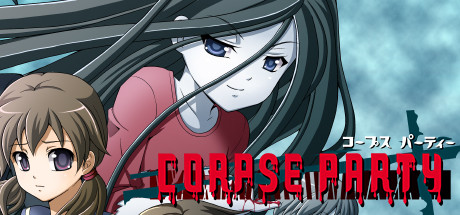
Corpse Party
- Vibe
- School-curse survival with brutal chapter flags
- Playtime
- 10-18 hours
- Difficulty
- Medium-high (wrong door equals funeral)
- Store
- Steam
The Hook & Core Philosophy
Corpse Party is Team GrisGris's long-lived school-horror series entry that Steam players usually mean when they say the name: a group of students perform a charm, arrive in a wrong Heavenly Host, and try to leave without becoming another name on the wall. It is chapter-based, flag-based, and famous for being willing to kill children in fiction in ways that Western ratings conversations still stumble over. Japanese horror fandom treats it as a franchise, not a one-off freeware. The PC version is how overseas players joined a conversation that had already happened on handhelds and doujin disks. You investigate, you split the party, you fail a step, you get a bad end that is longer than some indie A-endings. It is not subtle. It is extremely Japanese in its mix of cellphone-era urban legend, school space as holy ground, and save-in-multiple-slots-or-cry.
Mechanical Architecture & Game Loop
The design is closer to a visual novel with rooms than to a survival-horror shooter. Each chapter is a graph of correct orderings: which student walks where, which item is used on which puzzle, which spirit is named correctly. Failure is often delayed so that a mistake in a hallway becomes a cutscene you will not forget. That delayed fail is the cousin of Ib's endings and the meaner cousin of a JRPG mis-save. Party members are resources and people; splitting them is both a puzzle and a moral dare. Japanese wrong-end catalogs are part of the product. UI is dated on purpose or by heritage; do not expect a 2024 quality-of-life pass to delete the anxiety. Compared with modern Western narrative horror, Corpse Party is less cinematic camera and more chapter-play heritage. The Steam SKU you buy should be checked for which remake you want. This dossier's systems claim is flags, school map, brutal text, little gunplay. If you came for Resident Evil, you are in the wrong building. If you came for Japanese school-curse folklore as a game, you are home.
Community Reception & Japanese Player Consensus
- It is franchise-level horror literacy. Japanese players recommend Corpse Party the way they recommend a famous manga: not because it is new, because it is the reference. New horror fans get sent here to understand the school-curse template.
- Bad ends are the attraction. Discussion is less did-you-finish and more which-funeral-did-you-get. That completionist morbidity keeps wiki traffic and Steam reviews emotionally loud.
- It bridges doujin and commercial horror. GrisGris sits in the story Japanese indie horror tells about itself: from circle, to handheld, to Steam. Covering it is covering the industry path, not only a single game.
Radar Verdict & Steam Accessibility
Players who want Japanese school horror with full narrative weight. Not for the faint, not for anyone who needs action combat, not for a cozy night. Content notes: graphic violence against teens, ghosts, despair.
Language barrier
High (Text-Heavy/Lore)
Play in English if you can: the Steam-era text is the experience. Japanese is dense, with chapter talk, item names, spirit lore, and who-did-you-leave-behind flags. Without a strong localization, this is High barrier. You will walk into a wrong classroom because you did not parse a warning. Combat is not the issue; there is little traditional combat. Screen translation is a poor fit for the volume. If your English build is complete, treat in-play barrier as Low-Medium and emotional barrier as High. Do not use a Japanese-only copy as an action game.
Playtime and difficulty
Ten to eighteen hours for a conscientious first run with some bad ends. Higher if you collect them on purpose. Difficulty is attention and stomach, not twitch. Multiple saves are not optional.