Horror dossier
Ib
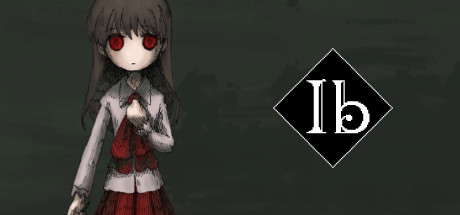
- Vibe
- Gallery-walking psychological horror classic
- Playtime
- 3-6 hours
- Difficulty
- Low-medium, ending-flag careful
- Store
- Steam
The Hook & Core Philosophy
Ib is kouri's museum-horror adventure, originally a freeware RPG Maker landmark, now a Steam remake with the same nightmare: a girl named Ib is trapped in a gallery where paintings want to be people and people want to be paintings. You walk, you inspect, you collect, you hide, and you decide, sometimes accidentally, who gets out. It is not a chase-stamina game first. It is a dollhouse of setpieces: roses as life, fabric worlds, mannequin logic, a companion who may be a painting. Japanese horror discourse still uses Ib as a default recommendation for beautiful fear rather than jump-scare video bait. The Steam edition exists because the freeware myth never died; a new generation wanted a legal, convenient, slightly dressed-up way to take the field trip. Overseas players finally got a storefront page. Japanese players got to argue about which ending is canon in higher resolution.
Mechanical Architecture & Game Loop
Ib's systems are light on purpose so that flags can be cruel. Inventory puzzles are classic adventure-game grammar: use the right object in the right frame. The rose and companion-care mechanics are the actual tension meter. Neglect is a silent fail state that only reveals itself at the end. That delayed judgment is why Japanese ending charts for Ib are a rite. Enemy encounters are often about route knowledge and hiding, not damage numbers. The gallery is a memory palace: repeating motifs teach you that the rules of a painting can overwrite the rules of a corridor. Compared with The Witch's House, Ib is less execution-trap and more relationship-trap. Compared with Yume Nikki, it has an actual adventure-game spine and a clearer objective. The remake's job was not to add a skill tree; it was to preserve the timing of dread while smoothing the freeware edges. If you speedrun, you are missing the point. If you treat every companion line as flavor, you will get the wrong ending and the game will not apologize. That is the design.
Community Reception & Japanese Player Consensus
- Freeware canon got a Steam body. Ib was already required reading. The commercial remake let people replay and screenshot in a modern context, which refreshed review volume and first-time streams.
- Endings as a social game. Japanese players compare who they saved. That conversation is more important than a horror jump. It keeps the title in recommendation cycles for newcomers to RPG Maker history.
- It is the pretty one you can gift. Among Japanese horror indies, Ib is the one people send to friends who say they hate horror. The art-museum pitch is gentler than Corpse Party's reputation, then the gallery gets unkind.
Radar Verdict & Steam Accessibility
Adventure-horror players, RPG Maker history fans, people who like Little Nightmares' vibe but want Japanese gallery surrealism. Not a combat RPG. Content note: child protagonist in peril, unreality, implied death.
Language barrier
Medium (Screen Translation OK)
The Steam version of Ib includes English. If you play English, barrier is Low: puzzles are object-and-room based, not kanji riddles. Japanese original text is famous and poetic; without it you lose some atmosphere lines. Puzzle solutions are visual: paintings, colors, items. The Medium grade applies to players who skip the official localization. Ending conditions depend on who you stay with and which items you protect, which is communicated in dialogue. Screen translation is enough to finish; it is not enough to appreciate why Japanese horror fans treat the script as literature.
Playtime and difficulty
Three to six hours, longer if you hunt endings. Mechanical difficulty is low; attention difficulty is medium. A walkthrough will rob you of the only combat the game has: your choices.