Horror dossier
Yume Nikki
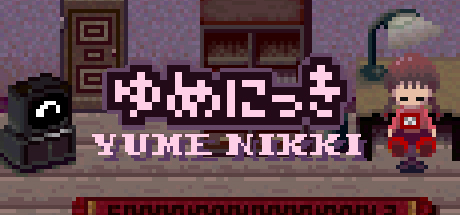
- Vibe
- Silent bedroom dream-walk, the internet's Japanese psychogeography
- Playtime
- 8-20 hours (no compass)
- Difficulty
- Low combat, high lostness
- Store
- Steam
The Hook & Core Philosophy
Yume Nikki is Kikiyama's dream explorer: a shut-in named Madotsuki naps, wanders collective-unconscious neighborhoods, collects effects that change her body, and never explains herself. It is the fountainhead of a whole Japanese and global walking-sim horror dialect. There is no quest log, no battle system worth the name, and no ending lecture that will make you feel clever. Japanese players still send it to people who ask for something that feels like an internet rumor with collision. The Steam release is a preservation and a passport, not a remake that adds crafting. You will get lost. That is the loop. Overseas players who need objectives will bounce. Japanese players who grew up on the freeware file still argue about windows, NPCs, and whether a map ruins the point. It belongs on this radar because every later Japanese surreal RPG Maker title is answering it, including the ones that pretend they are not.
Mechanical Architecture & Game Loop
The system is a graph of disconnected rooms with effects as keys and as toys. An effect might be a light, a bike, a snowman, a weapon that is also a joke. Using them is usually optional in the combat sense and mandatory in the folkloric sense if you want the ending conditions fans care about. Navigation is the difficulty slider: remember landmarks, notice floor tiles, accept that some worlds exist to waste you. Japanese wiki culture is enormous because the game refuses to be a product with a tutorial. Steam achievements and modern convenience do not rewrite that ideology. Compared with Ib, there is no adventure-game spine. Compared with La-Mulana, the puzzles are vibes with occasional flags, not monument grammar. The genius is negative space. Sound, sprite, and the bedroom as a hub teach more than a narrator would. If you come from Western walking sims with audio logs, Yume Nikki will feel empty until you realize emptiness is the authored material. Collecting effects is a completionist hook that Japanese players treat like stamp rallies in a nightmare. The true ending discussion is a social game that lives outside the executable. This dossier will not spoil the window. It will tell you to save, walk, and not demand a skill tree.
Community Reception & Japanese Player Consensus
- It is the source code of a genre. Japanese surreal horror still starts conversations with Yume Nikki. New Steam dream games get compared to it automatically, which refreshes the original's traffic.
- Fan archaeology never ended. Theories, maps, and effect lists are a hobby. Each new generation of posters rediscovers the bedroom, which looks like a trend even when the file is old.
- It is the anti-Steam-description game. Players recommend it specifically because store copy cannot capture it. That paradox makes it a prestige send in a culture that is tired of keyword stuffing.
Radar Verdict & Steam Accessibility
Explorers, atmospheric horror fans, people who liked the vibe of LSD Dream Emulator conversations or modern walking sims. Skip if you need combat, plot, or a map marker. Content note: surreal imagery, isolation, occasional shock sprites.
Language barrier
None (Visual/Action only)
Yume Nikki has almost no dialogue. You sleep, you walk, you collect effects, you wake up. Japanese and English builds are equally mute. The barrier is not language; it is refusing to read a fan map. Menus are tiny. Effects are icons. This is the rare High-art Japanese indie that a player with zero Japanese and zero English can complete in the mechanical sense, while still missing the two decades of fan exegesis that Japanese communities treat as the rest of the game.
Playtime and difficulty
You can wander for two hours or twenty. A guided effect hunt is shorter; a blind walk is the intended mood. Mechanical difficulty is near zero. Psychological and navigational difficulty is the product. No combat tax.